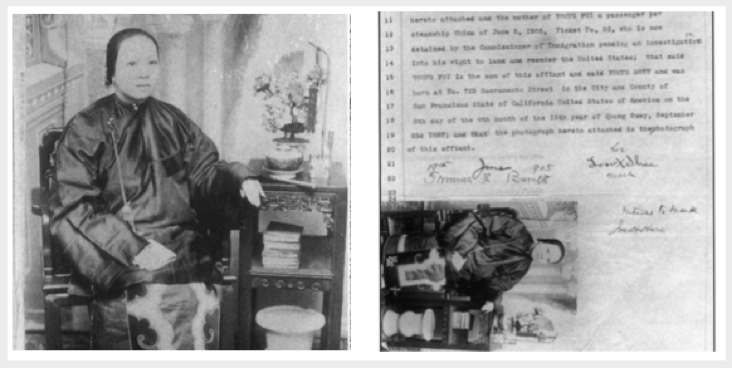
The United States systematically excluded Chinese immigrants through legislative acts during the late 19th and early 20th centuries, creating lasting anti-Chinese sentiments but despite these challenges, Chinese immigrants proved resilience by creating supportive communities, preserving their cultural identity, and challenging discriminatory policies, seen contradictions between America’s ideals of liberty and the lived experiences. Prior to the exclusion policies Chinese immigrants were allowed free immigration with the signing of the Burlingame Treaty of 1868. As anti-Chinese sentiments were on the rise policies would be placed to try and exclude Chinese immigrants. One of the first was the Page Act of 1875 which targeted Chinese women and in 1882 the Chinese Exclusion Act which stopped all Chinese laborers from entering the United States. The Geary Act of 1892 would extend these restrictions but also implicate a new policy, requiring Chinese already living in the United States to carry identification documents or face deportation. These new policies made it difficult for Chinese immigrants to become citizens and bring their families.
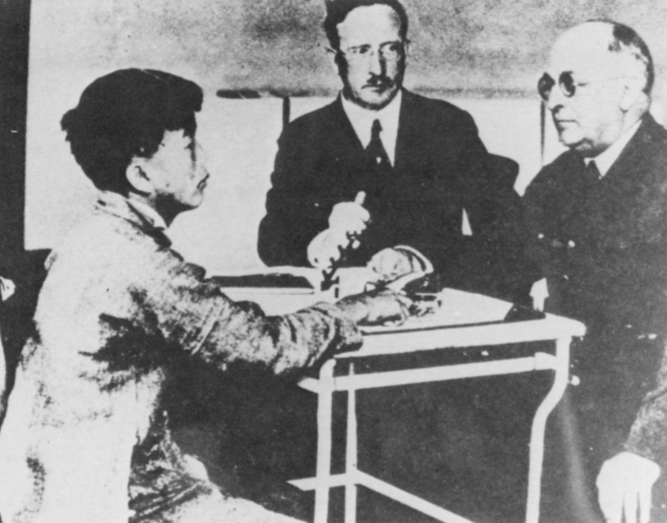
Unlike New York’s Ellis Island being a symbolism of freedom, San Francisco Bay’s Angel Island became to represent something much different. Angel Island would become one of the first detention centers holding Chinese immigrants from 1910 to 1940, where they would be subjected to intense interrogation. Many were detained for weeks to months living in harsh conditions and interrogated, with some being turned back. Many of the exams were degrading and Chinese immigrants were questioned in elaborate detail designed to keep them out. For many Chinese immigrants Angel Island would symbolize exclusion but also resilience.
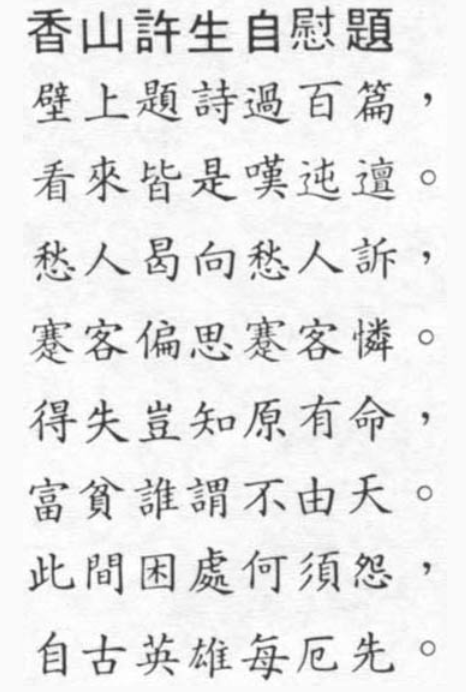
Poem by One Named Xu, From Xiangshan, Consoling Himself
Over a hundred poems are on the walls.
Looking at them, they are all pining at the delayed progress.
What can one sad person say to another?
Unfortunate travellers everywhere wish to commiserate.
Gain or lose, how is one to know what is predestined?
Rich or poor, who is to say it is not the will of heaven?
Why should one complain if he is detained and imprisoned here?
From ancient times, heroes often were the first ones to face adversity.
Chinese immigrants even with the many policies and challenges targeting them, were still able to show resilience. With the formation of the community Chinatown to persevere culture and and a space for community support. Challenging discriminatory laws such as in the Chae Chan Ping v. United States case. After the passing of the Geary Act, Chinese immigrants were to carry identification documents or face deportation. Chinese immigrant women were heavily scrutinized by the American public so many would combat this by displaying status through symbolism in their I.D. pictures. On the walls of Angel Island’s detainment housing, Chinese immigrants would write poems of their frustration but more importantly their hope. The history of Chinese exclusion in America showcases the many challenges Chinese immigrants endured but also reflects determination to building a place for themselves in American. These struggles and contributions of Chinese immigrants shaped the American identity today.
- Affidavit of Leong Shee from the Exclusion Era, with Identifying Photograph. Leong Shee’s affidavit photo, in detail and in original position (USDOJ “Affidavit” 05) ↩︎
- H. Mark Lai, “Island of Immortals: Chinese Immigrants and the Angel Island Immigration Station,” California History 57, no. 1 (1978): 88–103, https://doi.org/10.2307/25157818. ↩︎
- “Island: Poetry and History of Chinese Immigrants on Angel Island,”1910-1940” Seattle, WA: University of Washington Press, 1991. 12-33.
↩︎